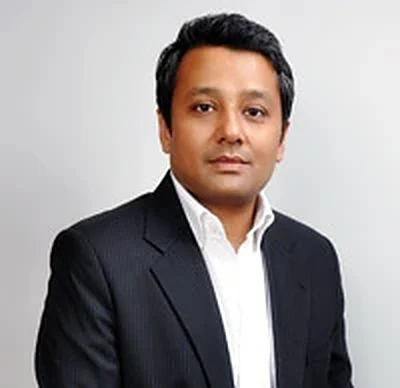
Dr Anupam Sinha
BDS, MDS - Orthodontics
- Delhi State Dental Council registration number A-6723 (2015).
Sedation dentistry · Greater Kailash 1, Delhi
Dental sedation uses medicine to help you stay calm and relaxed while a tooth is treated, and you stay awake and able to talk. At Orion Dental Clinic, a dentist in Greater Kailash 1 (GK 1), South Delhi, this page explains the types of conscious sedation, who they suit, how to prepare, what the research says about how well they work, and what to ask before you agree, in plain language.
Treatment is planned by Dr Anupam Sinha (BDS, MDS) and Dr Natalia DeSilva (BDS, MDS). Tell us if dental visits make you anxious, and ask as many questions as you need.
These figures come from Scottish guidance, NHS patient information and systematic reviews, listed at the end of the page. Your dentist will explain what applies to you.
Medically reviewed by Dr Anupam Sinha, BDS, MDS - Orthodontics, .
Quick answer
Sedation dentistry at Orion Dental Clinic in Greater Kailash 1, Delhi helps anxious patients stay relaxed during treatment while staying awake. Dr Anupam Sinha and Dr Natalia DeSilva assess each patient first. Nitrous oxide succeeded in about 95 in 100 cases in a review, and other types need an adult to take you home.
01 Overview
Dental sedation helps you relax so that treatment can be done. In conscious sedation, the drug or drugs depress the central nervous system enough for treatment to be carried out, but verbal contact with you is kept throughout, and the drugs and techniques carry a margin of safety wide enough to make loss of consciousness unlikely.1 Any technique that causes loss of consciousness is general anaesthesia, and in the UK general anaesthesia is not permitted in the primary dental care setting.1
The Scottish guidance names three standard techniques: inhalation of nitrous oxide and oxygen, and midazolam given into a vein, by mouth or through the nose.1 Sedation does not replace a local anaesthetic, which is still used to numb the tooth. It is one of several ways of managing dental anxiety, which also include behavioural methods such as cognitive behavioural therapy, distraction, guided imagery, hypnosis and play therapy.1
The NHS says sedation or a general anaesthetic may be used if a tooth is hard to remove or you are anxious.4 Our pages on wisdom tooth removal and tooth extraction explain the procedures where it is most often asked about. Please ask us which types of sedation the clinic can provide for your treatment.
Sedation helps you relax, but it is a plan that has to be matched to you and to the treatment.
02 Candidacy
Sedation is considered when anxiety or a difficult procedure would make treatment hard. The dentist decides after assessing you.
Sedation suits people whose anxiety or treatment needs it, and a careful assessment decides whether it is right.
03 Options
The Scottish guidance names three standard techniques, and the clinic will say which it can provide for you.
You breathe a mix of nitrous oxide and oxygen through a small mask, and the dose is adjusted to how you respond. Dedicated machines do not allow hypoxic levels. In 19 studies the success rate was 94.9%, 91.9% in children and 99.9% in adults.12
94.9% success 2
Sedation can be used with a tooth removal, such as a wisdom tooth, or with any long visit.
| Nitrous oxide | Intravenous midazolam | Oral or nasal midazolam | |
|---|---|---|---|
| How it is given | Breathed through a mask 1 | Through a vein 1 | By mouth or through the nose 1 |
| Escort needed | Adults do not usually need one; under 16s do 1 | A responsible adult for the rest of the day 1 | A responsible adult for the rest of the day 1 |
| Main limit | Not for everyone; success in 94.9% overall 2 | Needs a trained team, monitoring and recovery area 1 | Less predictable than the other two 1 |
The simplest technique that works for you is the one to choose, and the dentist should explain why.
04 Procedure
Every case is individual, so your steps may differ. This is the usual order, based on the Scottish guidance.1
Most of the safeguards come around the treatment rather than during it, and they matter as much as the drug.
The dentist asks about your health, medicines, allergies and anxiety, may record blood pressure, oxygen level and heart rate, and decides whether sedation is justified.1
You talk through non-drug methods such as distraction, guided imagery and relaxation, and decide whether you need sedation as well.1
The simplest effective technique, based on your assessment and the treatment, is chosen and the reason is recorded.1
You get spoken and written instructions on eating and drinking, medicines and who will take you home. Fasting advice depends on you and the type of sedation.1
The sedative is given and adjusted to your response, and you are monitored from before sedation until you are ready to leave. The dentist also numbs the tooth with a local anaesthetic.1
A trained member of the team stays with you in recovery until you are assessed as fit to leave.1
You leave with your escort, written instructions and a number to call.1
05 Aftercare
Your dentist will give you written instructions, and those come first.1
A responsible adult who can look after you should take you home and stay with you for the rest of the day, unless you had nitrous oxide as an adult. Going home by private car or taxi is advised where possible.1
Do not drive for 24 hours after a sedative.4 Follow the written restrictions on other activities.
Your instructions say how to take your usual medicines and when to eat and drink. If there was no reason to fast, you can usually eat and drink on the day, avoiding alcohol and large meals beforehand.1
Aftercare for the tooth treatment, such as an extraction, is separate, and your dentist will explain it.
Call the clinic on 098115 01995 if you feel unusually drowsy or unwell after you get home, or if you have pain, swelling or bleeding from the treatment. If you have trouble breathing, cannot be woken easily or have swelling that spreads across your face or neck, call 112 or go to a hospital emergency department.
Arrange your escort and the rest of the day before you come, and follow the written instructions.
06 Limits and risks
Sedation helps many people, but it is not always needed or suitable. These are situations where another plan may be better:
In these cases non-drug methods, treatment in hospital, or doing the treatment in smaller steps may be better.
The evidence for anxiety is mixed. A review of 17 randomised trials in wisdom tooth surgery found that conscious sedation was associated with less dental anxiety in 6 studies, but the findings were inconclusive and conflicting.3
Much of the guidance rests on consensus. The Scottish guidance says much of its evidence was other guidelines, mostly derived from professional consensus, and the evidence for midazolam was of low quality overall, with moderate-quality evidence for its effect on anxiety.1
Some types are less predictable. Oral and nasal midazolam are less controlled than nitrous oxide or an intravenous drug, which is why a tube is placed in a vein in case a reversal drug is needed.1
Sedation needs a team. The guidance requires monitoring from before sedation to discharge, a separate recovery area, and equipment and drugs for emergencies to be on hand.1 Ask who would give the sedation and how they are trained.
A good plan names these limits before treatment starts and says who is responsible for you during it.
07 Your visit
At your first visit, a dentist at Orion Dental Clinic asks what worries you about dental treatment, what has happened before, and what treatment you need. You are asked about your health, medicines, allergies and whether anyone could take you home afterwards.
The dentist assesses you and explains which options for staying relaxed the clinic can provide for your treatment, including methods without drugs. You talk through what each involves, what the risks are, whether you need to fast and what your escort would have to do, and nothing is decided until you agree.
The first visit is for questions and a plan, and it is fine to ask who would be looking after you during treatment.
08 Why this clinic
You meet the doctors who plan your care, and you can ask them how they would help you stay at ease.
Dr Anupam Sinha
BDS, MDS - Orthodontics

Dr Natalia DeSilva
BDS, MDS - Oral Medicine and Radiology
Dr Anupam Sinha and Dr Natalia DeSilva see patients who are anxious about treatment, and patients mention both in their reviews.
Patients describe in reviews that the dentists explained their options and reduced the anxiety they had about treatments they had put off.
You can ask which sedation options the clinic can provide, who gives them and how you are monitored, before you decide.
Ask which options the clinic provides, who gives them and how you will be monitored.
09 Reviews
“Dr. Natalia and and the whole staff of Orion dental is super kind and friendly and caring - exactly what one needs especially if they are afraid of dentists and dental procedures. I got my wisdom tooth out at Orion dental - and the experience was actually super comfortable and with minimal pain. I was quite scared but I was really made to feel at ease and less anxious. Would highly recommend this dental clinic!”
“I went to dr Natalia for my RTC, i was very scared but after meeting dr Natalia all my fears vanished. She is undoubtedly a very good doctor and apart from that a wonderful human being very caring and affectionate. I would highly recommend everyone to go to dr Natalia.”
“Hi, i took my son for the dental checkup. It was very good experience and dr. Natalia was gentle with the him. He was not scared at all.”
10 Visit us
Mon to Sat, 9:30 am to 8:00 pm
Orion Dental Clinic Basement, E 75, Greater Kailash-1,| Monday to Saturday | 9:30 am to 8:00 pm |
|---|---|
| Sunday | Closed |
If you are looking for sedation dentistry in Greater Kailash or nearby, Orion Dental Clinic is in the basement of E 75, Greater Kailash Enclave 1 (GK 1), opposite Anubhav Play School, with the entrance at Gate 1, so call or message us on WhatsApp to book an appointment and use the map for directions. More about the clinic: dentist in Greater Kailash.
11 Travelling patients
If you are visiting Delhi and need sedation, plan for an adult to travel home with you, because most types need an escort who stays with you for the rest of the day,1 and you should not drive for 24 hours after a sedative.4 Tell us what treatment you need and when you fly, and we will say what is possible.
You can read about how dental tourism in Delhi works.
Bring an adult with you, and allow time to recover before you travel.
12 Questions
A technique in which a drug or drugs help you relax enough for treatment, but you stay awake and able to respond, and verbal contact is kept throughout.1
No, not with conscious sedation. Any technique that causes loss of consciousness is general anaesthesia, which is a different thing.1
Usually yes. Sedation helps you relax, and the local anaesthetic numbs the tooth. Your dentist will explain what you will have.
In a review of 19 studies and 1,293 patients, the success rate was 94.9%, 91.9% in children and 99.9% in adults, with success mostly defined as finishing the treatment.2
For sedation other than nitrous oxide, yes: a responsible adult should take you home and stay for the rest of the day. Adults who had nitrous oxide do not usually need an escort, but under 16s do.1
It depends. If there is no reason to fast, you can usually eat and drink on the day, avoiding alcohol and large meals. Follow the instructions you are given.1
Nitrous oxide is the only standard technique for children, and other types are considered advanced.1 Ask the dentist what would be suitable for your child.
Please call or message us and we will tell you which options are available for your treatment, and who would give them.
Orion Dental Clinic is a sedation dentistry clinic in Greater Kailash 1 (GK 1), in the basement of E 75, Greater Kailash Enclave 1, opposite Anubhav Play School, with the entrance at Gate 1. Patients come for sedation dentistry in Greater Kailash from Kailash Colony, CR Park, Nehru Place, Lajpat Nagar, Defence Colony and South Extension. Call or message us on WhatsApp to book an appointment.
13 Second opinion
A consultation lets you say what worries you and ask what could help, before you commit to anything. Bring the name and number of an adult who could take you home if sedation is an option. The dentist will assess you, explain the choices, including methods without drugs, and tell you which the clinic can provide. There is no form to fill in: message us on WhatsApp or call, and we will find a time that suits you.
14 Related
Read this for the procedure where sedation is most often discussed.
Read this for how teeth are taken out and what recovery involves.
Read this for treatment that people often put off out of worry.
Patient guides
What you will and will not feel during and after dental implant surgery, how long discomfort lasts, how it is managed and when pain is a warning sign.
The parts of a dental implant, how the jawbone bonds to the titanium post, and why that bond lets a new tooth carry your bite.
How cavities form, the signs to look for at each stage, how fillings and other treatments work, and the habits that prevent decay.
This page is general information, not a diagnosis or a substitute for an examination, and results vary between patients.