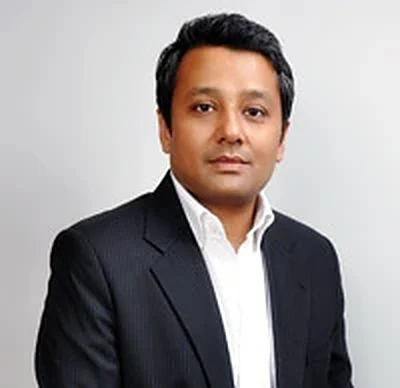
Dr Anupam Sinha
BDS, MDS - Orthodontics
- Delhi State Dental Council registration number A-6723 (2015).
Clear aligners · Greater Kailash 1, Delhi
Clear aligners are thin, clear, removable plastic trays that move teeth in small steps instead of using brackets and wires. At Orion Dental Clinic, a dentist in Greater Kailash 1 (GK 1), South Delhi, orthodontic treatment is planned by Dr Anupam Sinha, who holds a master's degree in orthodontics. This page explains how aligners work, who they suit, what the research says and what can go wrong, in plain language, so that you can decide with confidence.
Treatment is planned by Dr Anupam Sinha (BDS, MDS), and Dr Natalia DeSilva (BDS, MDS) also sees patients at the clinic. For the wider picture, read our guide to braces treatment. Ask as many questions as you need before you decide.
These statements come from the British Orthodontic Society and from systematic reviews, listed at the end of the page. Your orthodontist will give the timeline for your own teeth.
Medically reviewed by Dr Anupam Sinha, BDS, MDS - Orthodontics, .
Quick answer
Clear aligners at Orion Dental Clinic in Greater Kailash 1, Delhi are a series of clear removable trays that move teeth gradually. Dr Anupam Sinha plans each case after an examination. They are worn full-time except at meals and suit mild to moderate problems, while research finds braces give better results in many adult cases.
01 Overview
Clear aligners are thin, flexible, clear plastic trays that fit closely over the teeth. You are given a series of aligners, and each one moves the teeth a small distance before the next takes over. They are custom-made from an accurate impression of the mouth, to a plan set by the orthodontist.1
Aligners are removable, but they need to be worn full-time, day and night, except at meal times.1 They are most often used where the teeth can be lined up without taking any out, for example in mild to moderate irregularity, mild spacing, or crowding that can be treated with a little widening of the arch or by slimming the sides of teeth.1
Aligners are one of several ways to straighten teeth. If you would like to compare them with fixed braces, our pages on metal braces and ceramic braces explain those, and a separate page covers one well-known brand of aligner.
Aligners replace brackets with removable trays, so how well they work depends on how well you wear them and how suited your teeth are.
02 Candidacy
The British Orthodontic Society describes aligners as ideally suited to adults whose lifestyle or work makes visible fixed braces difficult.1 The orthodontist decides after a proper assessment, and says honestly whether aligners suit your teeth.
Aligners suit simpler problems, and a proper assessment is what shows which kind you have.
03 Options
Aligners are one of several choices, and the research does not rank them above braces for every case.
A series of removable trays for mild to moderate problems that do not need extractions. They can move teeth predictably in some ways and less well in others.15
Removable, worn full-time 1
For some problems, additional techniques such as fixed appliances may be needed alongside aligners.1 Your orthodontist will say if this applies to you.
A combined plan 1
Brackets and wire on the teeth, which cannot be taken out and can treat a wider range of problems. See ceramic braces for a discreet type, and braces for adults.
Not removable
A well-known brand of aligner has its own page: Invisalign. Research on that system is summarised there.
| Clear aligners | Fixed braces | |
|---|---|---|
| Removable | Yes, but worn full-time except at meals 1 | No |
| Better suited to | Mild to moderate problems, without extractions 15 | A wider range of problems, including complex ones |
| Outcome in adults | Worse occlusal result in a review of 11 studies, moderate-quality evidence 2 | The comparison 2 |
| Pain | Lower in the first few days, then no different 4 | Higher in the first few days 4 |
| Treatment time | No difference in one review 2, shorter in mild to moderate cases in another 3 | The comparison |
Aligners trade some predictability for convenience, so the choice depends on how complex your teeth are.
04 Procedure
Every case is planned individually, so your steps may differ. This is the usual order for clear aligners.1
Aligners work when they are worn, so the wear schedule is as important as the plan.
A proper orthodontic assessment, diagnosis and treatment plan is essential to successful aligner treatment.1 The orthodontist examines your teeth, gums and bite, and takes X-rays and photographs. Aligner treatment should not begin without this.
An accurate impression or scan of your mouth is taken, and the aligners are custom-made from it.1
The orthodontist plans how far each tooth should move and in how many steps. You see the plan, and you are told if some teeth will need other techniques.1
You wear each aligner day and night except at meal times, then move on to the next in the series.1 Each one shifts the teeth a small distance.
You come back for reviews so that the orthodontist can check progress and decide if extra steps are needed. If the teeth are not tracking as planned, the plan is revised.
After any aligner treatment, retainers are required so that the teeth keep their corrected positions.1 Your orthodontist will say how long to wear yours.
05 Aftercare
Your orthodontist will give you written advice for your aligners, and that comes first. These are the basics.
Teeth can feel tender for a few days with each new set. A review found that pain with Invisalign was lower than with fixed braces in the first days, and no different after that.4
Wear the aligners day and night, and take them out for meals.1 Keep to your orthodontist's schedule for each set.
Brush your teeth and clean the aligners as your orthodontist shows you, before putting them back in. Ask what to clean them with.
Ring the clinic if an aligner is lost, cracked or no longer fits, rather than skipping on to the next one, so that treatment stays on track.
Ring the clinic on 098115 01995 if an aligner cracks, is lost or stops fitting, or if you feel pain that lasts more than a few days. Do not move on to the next tray without asking. Tell us if your gums bleed or a tooth feels loose. If you cannot breathe or swallow easily, or swelling spreads across your face or neck, go to a hospital emergency department.
Wear them as directed, keep the teeth and trays clean and call if an aligner is lost or cracks.
06 Limits and risks
Clear aligners are not a better choice for every set of teeth. A good orthodontist is willing to say so. These are situations where your orthodontist may advise braces or a combined plan:
In these cases fixed braces, or aligners combined with other techniques, may give a better result, or treatment may start after the teeth and gums have been treated.
Results may be less good than with braces. A review of 11 studies with 887 patients, with a mean age of 28, found moderate-quality evidence that aligners gave a worse occlusal result than fixed braces and more patients with an unacceptable result. The authors concluded that the evidence does not support aligners as equally effective as braces.2
Some movements are harder. A review of Invisalign studies found that teeth can be levelled, tipped and turned predictably in most cases, but that effectiveness was limited for widening the arch by bodily movement, closing extraction spaces, correcting contacts between the upper and lower teeth and larger front-to-back or vertical problems.5 Another review said the evidence for the effectiveness of aligners is generally lacking.3
They only work when worn. The trays need to be worn day and night except at meals,1 so a plan depends on your daily habits.
Teeth can move back. After any aligner treatment, retainers are required to keep the teeth in their corrected positions.1
A good plan names these limits before treatment starts, and says openly when braces would give a better result.
07 Your visit
At your first visit, a dentist at Orion Dental Clinic asks what you would like to change, whether you can wear trays for most of the day, and about your health, medicines and earlier dental work. Bring any old retainers or X-rays.
The orthodontist examines your teeth, gums and bite, and takes impressions or a scan to see whether aligners suit your case. You then see how the teeth are planned to move, how many trays that takes and what a retainer involves, and you hear honestly if fixed braces would suit you better.
You see the plan, and whether aligners fit your teeth, before any tray is made.
08 Why this clinic
You meet the doctors who plan your treatment, and you can ask them whether aligners or braces suit your teeth better.
Dr Anupam Sinha
BDS, MDS - Orthodontics

Dr Natalia DeSilva
BDS, MDS - Oral Medicine and Radiology
Dr Anupam Sinha holds a master's degree in orthodontics (MDS) and belongs to the Indian Orthodontic Society.
Patients who had orthodontic treatment at the clinic describe it in reviews of Dr Anupam Sinha.
Imaging is available at the clinic, so the records used for planning can be taken there.
Ask whether your teeth suit aligners or whether braces would give a better result.
09 Reviews
“I had a very comforting consultation with Dr Anupam at Orion Clinic for my orthodontic treatment. He explained everything clearly, answered all my questions with patience, and made me feel completely at ease. The clinic has a warm, caring vibe and the staff are genuinely attentive. Highly recommend.”
“Had a wonderful experience with Dr. Anupam and Dr. Natalia. Went for Braces and RCT and the doctor were thorough with the treatment and follow ups. Will higher recommend Orion orthodontic.”
“I got my orthodontic treatment done from Dr. Anupam Sinha at Orion Dental and it was a seamless experience from start to finish. They inform you in advance of how everything works . If you’re someone who wants to get your smile sorted be it Gen Alpha, GenZ or Millennial, Orion Dental is the place to be! Cheers!”
10 Visit us
Mon to Sat, 9:30 am to 8:00 pm
Orion Dental Clinic Basement, E 75, Greater Kailash-1,| Monday to Saturday | 9:30 am to 8:00 pm |
|---|---|
| Sunday | Closed |
If you are looking for clear aligners in Greater Kailash or nearby, Orion Dental Clinic is in the basement of E 75, Greater Kailash Enclave 1 (GK 1), opposite Anubhav Play School, with the entrance at Gate 1, so call or message us on WhatsApp to book an appointment and use the map for directions. More about the clinic: dentist in Greater Kailash.
11 Travelling patients
Aligners are removable, which can make them easier for people who live outside Delhi, but a proper orthodontic assessment and treatment plan is essential and treatment still needs reviews.1 Tell us where you live and how often you could visit, and we will say frankly whether treatment here is practical, or whether a local orthodontist would serve you better for the review visits.
You can read about aligners and braces for international patients.
Aligners can be easier to manage from a distance, but they still need a proper assessment and reviews.
12 Questions
They are thin, flexible, clear plastic trays that fit closely over the teeth. You wear a series of them, and each moves the teeth a small distance before the next takes over.1
Day and night, except at meal times.1 Your orthodontist will give you a schedule, and keeping to it matters because each set only moves the teeth if it is worn.
Teeth can feel tender. A review found that pain with Invisalign was lower than with fixed braces in the first days, and no different after that, up to 3 months.4
People with severe crowding, those who need teeth taken out, those who need complex tooth movements, and those whose problem comes from the size or position of the jaws may need other techniques.1
Yes. After any aligner treatment, retainers are required so that the teeth keep their corrected positions.1
A proper orthodontic assessment, diagnosis and treatment plan is essential to successful aligner treatment, so aligners should not be started without an examination.1
Orion Dental Clinic is a clear aligners clinic in Greater Kailash 1 (GK 1), in the basement of E 75, Greater Kailash Enclave 1, opposite Anubhav Play School, with the entrance at Gate 1. Patients come for clear aligners in Greater Kailash from Kailash Colony, CR Park, Nehru Place, Lajpat Nagar, Defence Colony and South Extension. Call or message us on WhatsApp to book an appointment.
13 Second opinion
A consultation shows whether aligners suit your case, how the teeth would move, and whether fixed braces would be the better choice. Bring any old retainers or X-rays. The orthodontist will examine you and explain every step, including how many hours a day you must wear the trays. Call us or message us on WhatsApp; there is no form to fill in.
14 Related
Read this for one well-known brand of clear aligner and the research on it.
Read this for what adults should expect from fixed braces.
Read this for fixed braces that are hidden behind the teeth.
Patient guides
Who Invisalign suits and who it does not, what the research says about its results, the questions to ask before starting and how to get the most from it.
What Invisalign attachments are, why some teeth need them, how they are placed and removed, and what to expect while you wear them.
Why teeth move back after braces or aligners, the main kinds of retainer, how long to wear them, how to clean them and what to do if one breaks.
This page is general information, not a diagnosis or a substitute for an examination, and results vary between patients.